


When I stepped back from Council, I did so with clarity and optimism — not just about where our cities were headed, but about the role planning could play in shaping our future. For over two decades, I’ve worked at the intersection of planning, politics, and community, as a mayor, consultant, and researcher. I’ve seen the power of good planning to create liveable, inclusive, future-ready places. I’ve also seen how easily it can be derailed by short-term thinking — and how costly that can be for clients, communities, and councils alike. Greiss Planning exists to bring clarity, rigour, and steady leadership to the approvals process, so good projects can move forward with confidence.
Stay in the loop!
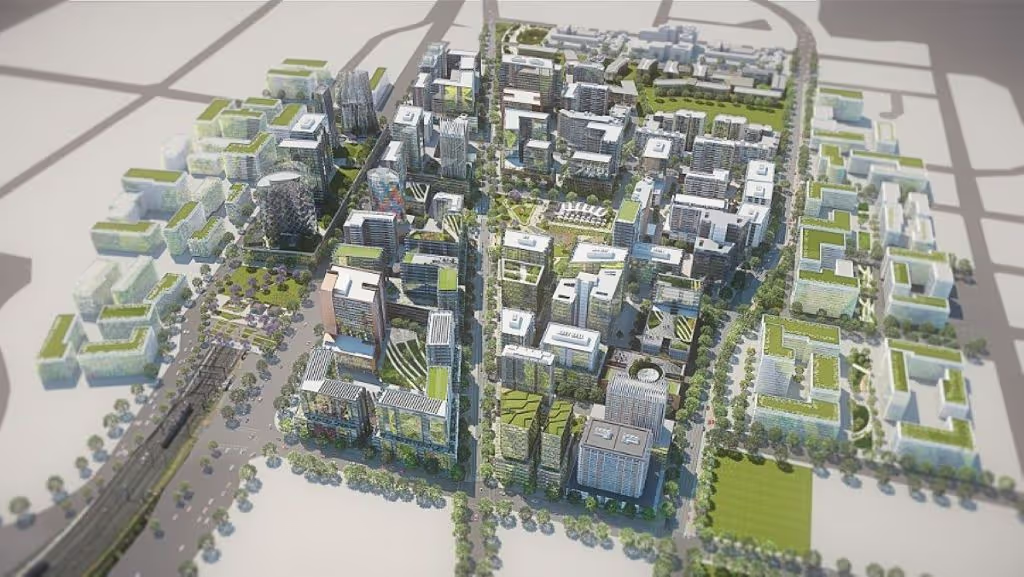
I love strategic planning. I believe in vision. I believe in the courage it takes to imagine a better Campbelltown — not just bigger, but fairer, greener, more complete. But before we talk about where we’re going, we need to be honest about where we are, and how often we’ve promised ourselves the future while delaying the present.
Campbelltown has been talked about as a “regional centre” for generations. As far back as the 1945 County of Cumberland Planning Scheme, the idea was clear: build a city that can stand on its own — jobs, industry, services, housing — so Sydney isn’t forced to lean on its eastern core forever. And yet, even by the late 1950s, observers were already noting how little had changed, calling again for a “really imaginative” new town. Since then we’ve produced no shortage of well-researched, carefully argued plans — local, regional, metropolitan — each repeating the same ambition: a self-contained Campbelltown anchoring the wider Macarthur region.
And another plan will come. It always does.
NSW strategic planning has a rhythm: a vision is released, a glossy future is drawn, growth is forecast, and everyone nods as if the hard part is now behind us. But the hard part is never the plan. The hard part is delivery — funding, sequencing, governance, follow-through. Still, I’m not cynical about planning. We should never stop being imaginative. We should keep reimagining a better city and holding onto the hope that the next plan might finally align housing growth with real employment, infrastructure, and services.
But hope can’t become an excuse.
There’s a difference between utopian ideals and lived reality. Too often, strategic plans chase distant transformation while everyday challenges remain unresolved — the very things that determine whether daily life feels safe, dignified, connected, and stable. A successful city isn’t measured only by ambition; it’s measured by the quality of ordinary days.
A good quality of life is not a “bonus” delivered in Stage 4 of a future program. It’s the bedrock of an equitable city — and it can’t wait for “Macarthur 2040” or whatever the next strategy is called. If we’re serious about housing targets and growth timeframes, then we must treat infrastructure and services with the same urgency. Not as an afterthought. As a core commitment.
Because when everyday needs are delayed in favour of distant promises, people disengage. Trust erodes. And planning becomes something done to communities rather than with them.
So yes — let’s dream. Let’s stay imaginative. Let’s keep pushing for the city we know Campbelltown can be. But first, let’s map where we are. Let’s start with what people need now. Because only by centring today’s reality can we build a future that’s actually worth striving for.
Read more → Reimagine the future, but let’s not ignore current problems