Subscribe to get news update

Services / Planning Proposals & Rezoning
Sometimes the right outcome for a site is simply not permissible under the current controls. A planning proposal — often called a rezoning — amends the Local Environmental Plan itself, changing the zoning, height, floor space ratio or minimum lot size that applies to the land. It is assessed on strategic and site-specific merit, not on a particular design.
Discuss a rezoning opportunityLast updated: 1 August 2026 · Written by Dr George Greiss
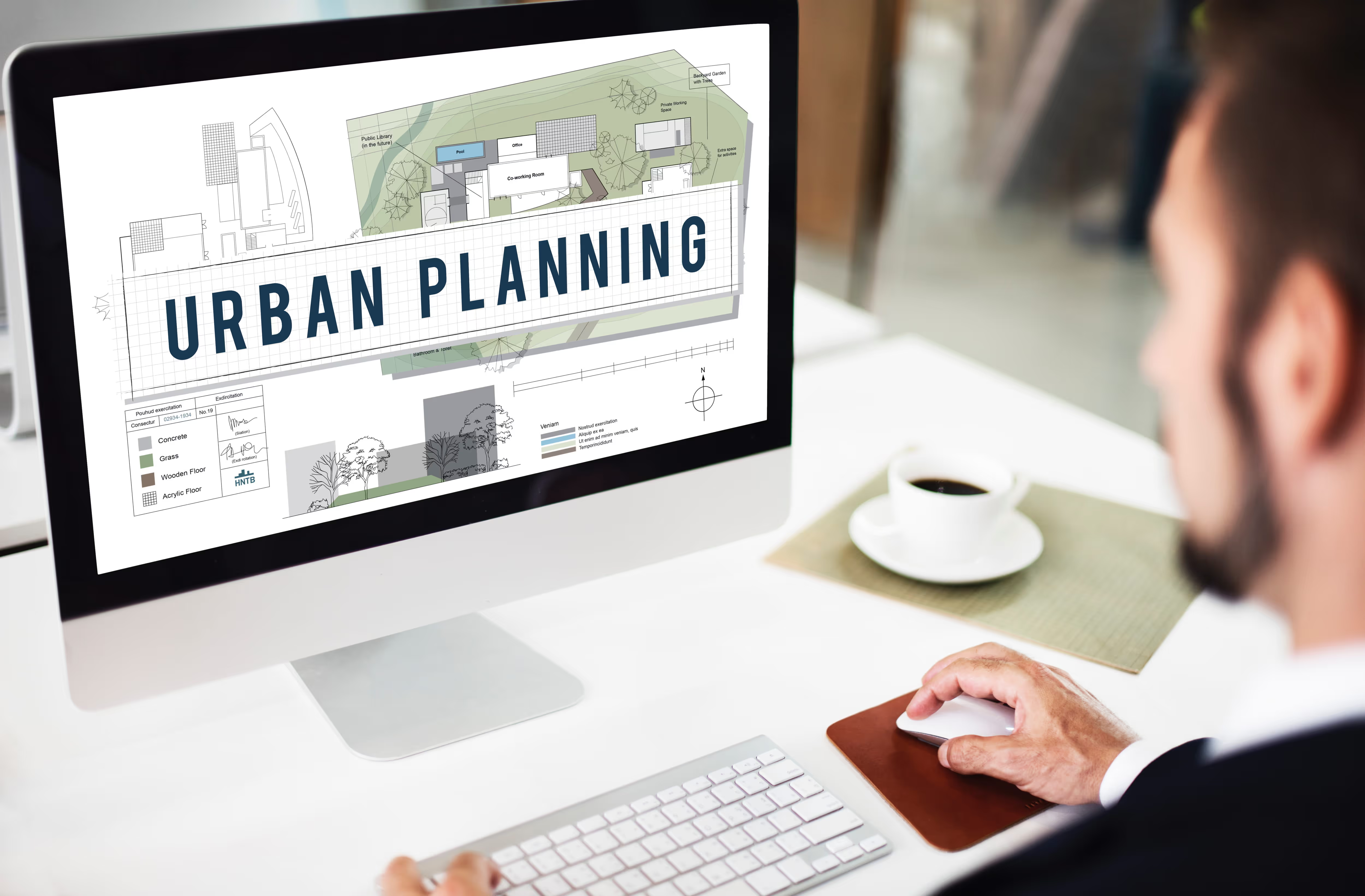
A development application works within the existing planning controls. A planning proposal changes the controls themselves. If the land use you are pursuing is prohibited in the zone, or a development standard such as height, floor space ratio or minimum lot size stands in the way of an otherwise sound outcome, a rezoning may be the right pathway — provided the change can be properly justified.
Planning proposals suit landowners, developers and project teams pursuing a use the current zoning does not permit, seeking a change to a development standard, responding to a Gateway determination or council requirements, making a submission on a council LEP review, or testing what a site could realistically support before committing to a purchase or a project.
A planning proposal is not judged on the merits of a particular design. The threshold question is whether changing the controls has strategic merit — whether the proposal aligns with the regional and district plans that guide how an area is intended to grow, the council's Local Strategic Planning Statement, its local housing strategy, and the ministerial directions and State Environmental Planning Policies that apply to the land.
Site-specific merit matters just as much: whether the land can genuinely support the intended change having regard to its context, constraints and infrastructure. A proposal that cannot demonstrate both rarely progresses, however attractive the outcome might be for the site itself. Getting an honest read on merit early is the single most valuable step in the process.
Depending on the site and the change sought, our review considers:
Greiss Planning is led by Dr George Greiss, who holds a PhD in urban planning and spent sixteen years inside local government, including in strategic planning decision-making roles. That experience means advice grounded in how councils actually weigh rezoning requests — and it means honest advice early: not every site is a rezoning candidate, and no consultant can guarantee an outcome. What we can do is tell you plainly whether a proposal has realistic prospects, and give it the strongest possible foundation if it does.

A planning proposal is the formal document that begins the process of amending a Local Environmental Plan. It sets out the intended change — rezoning land, or altering standards such as height, floor space ratio or minimum lot size — together with the strategic justification for it. If supported, the amendment proceeds through the NSW Gateway process to finalisation.
A development application seeks consent for a specific development under the existing planning controls. A planning proposal changes the controls themselves. It is assessed on strategic and site-specific merit rather than design detail, involves both council and the NSW Government, and follows a longer, more strategic process than a DA.
Typically years rather than months, and it is worth being upfront about that. Timeframes vary with the complexity of the change, the technical studies required, the council's LEP program and the Gateway pathway. Part of our initial advice is a realistic view of the likely timeframe for your site, so you can plan around it.
Once a council supports a planning proposal, it goes to the Department of Planning for a Gateway determination — a decision on whether the proposal should proceed, on what conditions, and with what studies and consultation. Public exhibition, assessment of submissions and legal drafting follow before the LEP amendment is made.
The smarter first step is to test strategic merit before you buy. We provide pre-purchase advice on whether a rezoning has realistic prospects, what it would involve and the likely timeframes — so you can price the opportunity and the risk before committing, rather than discovering the constraints afterwards.
We stage the work so cost matches certainty. Initial strategic merit advice is provided for a fixed fee; full planning proposal documentation is scoped and quoted after that review, once the pathway is clear. Technical studies by specialist consultants are additional and depend on what the Gateway process requires for your site.
Get an honest, early read on whether a planning proposal has merit — before you commit time and money.
Get in touch